
Studer Family Children's Hospital 

PGY1 Pharmacy Residency Program
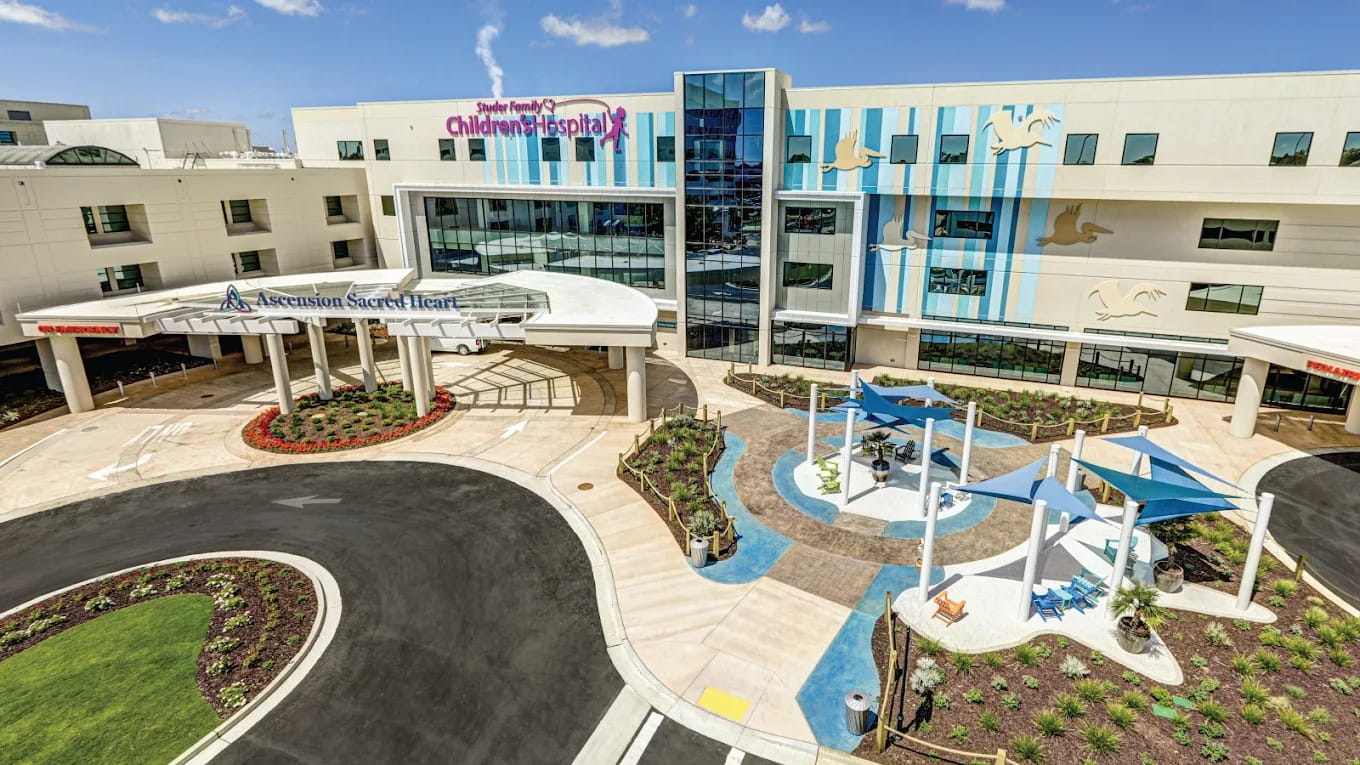
Studer Family Children's Hospital PG1 Residency Program Overview

Starting Date: 06/15/2027

Application Deadline: 1/3/2027

Duration/Type: 52 weeks

Number Positions:  2

Annual Stipend: $52,500

Benefits: Paid time off and sick days (12 days); full health, dental, and vision benefits (if the resident elects coverage); Paid attendance to ASHP Midyear meeting and the Florida Residency Conference (FRC).  For each conference benefits include conference registration, meals, lodging, mileage reimbursement (if driving) or airfare (if flying). 

Interview Required: Yes (Offering both Onsite and Virtual Interviews)

Residency Special Features:

  • Candidates must be graduates or candidates for graduation from an ACPE accredited degree program.
  • Candidates must be eligible for pharmacist licensure in the state of Florida or have an active pharmacist license in the state of Florida.
  • Candidates must be committed to fulfilling all the requirements of the program.  
  • Candidates must pass a drug screen upon employment.  

Ascension Sacred Heart NMS Code = 163113 

Benefits:  Paid time off (12 days); full health, dental, and vision benefits; Paid attendance to ASHP Midyear meeting and the Florida Residency Conference.

Special Requirements for Acceptance: 

  • Candidates must be graduates or candidates for graduation from an ACPE accredited degree program.
  • Candidates must be eligible for pharmacist licensure in the state of Florida or have an active pharmacist license in the state of Florida.
  • Candidates must be committed to fulfilling all the requirements of the program.  
  • Candidates must pass a drug screen upon employment.  

Completed applications include:

  • Curriculum Vitae
  • Letter of intent
  • College of Pharmacy transcripts
  • Three letters of recommendation

Applicants can select from the following interview 2027 interview dates: 

In Person Interviews

  • Friday January 22, 2027

Virtual Interview

  • Wednesday, January 27, 2027

Contact us:

Residency Program Director

Ernie Cyr

ernie.cyr@ascension.org

Residency Program Coordinator

Keyosha Smart Stallworth

keyosha.smart@ascension.org

PGY1 Program Purpose

PGY1 pharmacy residency programs build on Doctor of Pharmacy (Pharm.D.) education and outcomes to contribute to the development of clinical pharmacists responsible for medication-related care of patients with a wide range of conditions, eligible for board certification, and eligible for postgraduate year two (PGY2) pharmacy residency training.

PGY1 Residency Program Mission

PGY1 pharmacy residency programs build on Doctor of Pharmacy (Pharm.D.) education and outcomes to contribute to the development of clinical pharmacists responsible for medication-related care of patients with a wide range of conditions, eligible for board certification, and eligible for postgraduate year two (PGY2) pharmacy residency training.

About us - Ascension

Ascension Sacred Heart is part of Ascension, the nation's largest Catholic, nonprofit health system. Ascension Sacred Heart Pensacola is committed to delivering compassionate, personalized care to all, with special attention to persons living in poverty and those most vulnerable.

About us - Studer Family Children's Hospital

Studer Family Children’s Hospital is northwest Florida’s only children’s hospital

Every day, doctors and care teams at Studer Family Children’s Hospital at Ascension Sacred Heart deliver advanced, lifesaving pediatric care for sick and injured children from across Northwest Florida, South Alabama and South Georgia.

At Studer Family Children’s Hospital, children and their families are connected to more than 120 pediatric specialists in over 30 pediatric specialties – including leading pediatric surgical care, advanced neonatal care, comprehensive blood and cancer care and more.

For more complex conditions, children benefit from the care of multispecialty care teams, delivering care for the whole child – physical and emotional health.

And when families need emergency care, we’re ready with 24/7 pediatric emergency, trauma and surgical care at Studer Family Children’s Hospital. Our neonatal and pediatric ambulances and helicopter transport team – along with community emergency medical service (EMS) providers – bring lifesaving care to communities across our region.

About our PGY1 Program

Our PGY1 residency program has been ASHP accredited since 2003. We are Pensacola’s first accredited pharmacy residency program with over 20 years of experience as a PGY1 residency program in the Northwest Florida region. In 2024, we pursued a separate pediatric PGY1 residency program at Studer Family Children’s Hospital (SFCH) within Ascension Sacred Heart Pensacola.

As of April 2026, our SFCH PGY1 Pharmacy Residency Program is fully accredited by ASHP. We recruit two (2) PGY1 resident positions each year. 

Our Vision

Answering God’s call to bring health, healing and hope to all.

Our Values

Service of the poor: Generosity of spirit, especially for persons most in need
Reverence: Respect and compassion for the dignity and diversity of life
Integrity: Inspiring trust through personal leadership
Wisdom: Integrating excellence and stewardship
Creativity: Courageous innovation
Dedication: Affirming the hope and joy of our ministry

Our History

More than a century ago, when the people of Pensacola asked for better healthcare and a more modern hospital, their prayers were answered by the Daughters of Charity. The Daughters comprise a religious order that was founded in 1633 in France by St. Vincent de Paul and St. Louise de Marillac with the mission of caring for the poor and the sick. The Daughters came to Pensacola not only to build a hospital, but to carry out their charitable mission of providing excellent healthcare to all persons, with special attention to the poor and vulnerable.

Today, the hospital built in Pensacola by the Sisters continues that same mission. Pensacola remains the hub of what has become a truly regional Health System with three hospital campuses, as well as outpatient facilities, physician offices and other services spanning 200 miles of the Gulf Coast from Gulf Shores, Ala. to Apalachicola, Fla. After 50 years in its original stone structure on 12th Avenue, the hospital relocated in 1965 to a new hospital off Ninth Avenue in Pensacola, across from Cordova Mall.

Since then, Sacred Heart has continued to advance its technology and expand its services. In August of 1996, Sacred Heart Children's Hospital - Northwest Florida's first and only children's hospital - opened on the Pensacola campus.

In 2000, Sacred Heart completed major expansion projects that added new wings for surgical suites, a Regional Heart and Vascular Institute and a new center for emergency/trauma services. Sacred Heart teamed up with Methodist Homes to open the new Haven of Our Lady of Peace nursing home off Summit Boulevard in November 2001. Sacred Heart completed the largest expansion of its Pensacola campus in 2014 with the construction of the Bayou Tower, which added 112 private rooms to the hospital. In 2016, Sacred Heart broke ground on a new four-story Children's Hospital -- the Studer Family Children's Hospital at Sacred Heart -- which opened in 2019.

Today, Sacred Heart continues its legacy of serving individuals, families and communities as part of Ascension. Together, our caregivers strive to bring you coordinated, compassionate care that is personalized to your individual needs.

Ascension Health

Ascension is one of the nation’s leading non-profit and Catholic health systems, with a Mission of delivering compassionate, personalized care to all, with special attention to those most vulnerable. In FY2025, Ascension provided $1.7 billion in care of persons living in poverty and other community benefit programs along with $1.8 billion of unreimbursed care for Medicare patients. Across 17 states and the District of Columbia, Ascension’s network encompasses approximately 97,000 associates, 23,400 independent providers, 90 wholly owned or consolidated hospitals, and ownership interests in 29 additional hospitals through partnerships. Ascension also operates 22 senior living facilities and a variety of other care sites offering a range of healthcare services.

PGY1 Residency Program Learning Structure

The PGY1 pharmacy residency program’s structure is outlined in the table below. Learning experience sequencing takes into account the residents’ entering interests, whenever possible. This is intended to assist the residents in defining their areas of interest as well as evaluate what opportunities to seek at the Midyear Clinical meeting. To allow for flexibility, learning experiences may change throughout the course of the residency year as long as it is in the best interest of the residents and the program.

Studer Family Children's Hospital PGY1 Residency Program Structure
​

Studer Family Children’s Hospital PGY1 Residency Program Structure

Required “Core” Rotations

Duration is one calendar month with the exception of orientation

Number of core rotations = 8

Core Pediatric Orientation (6 weeks)

Core Pediatric Internal Medicine 1

Core Pediatric Internal Medicine 2

Core Infectious Diseases

Core Neonatal Intensive Care

Core Pediatric Intensive Care

Core Pediatric Hematology/Oncology

Core Pediatric Pharmacy Administration

Core Block Rotations

Block Infectious Diseases (2 presentations)

  • Two evidence-based topic discussion presentations that are one-hour long (~40 min for presentation, ~20 minutes for questions/discussion) incorporating a patient case. 

  • This will occur approximately every 2-4 weeks over the 52 week residency program

Required “Core” Longitudinal Rotations (7)

Rotation

Cadence

Longitudinal Pharmacy Practice Management


  • 36 week learning experience 

  • Each resident will participate in two 12-week block experiences focused on Pharmacy and Therapeutics (P&T) and Medication Safety/Pain Stewardship.

  • During the 12 weeks focused on Medication Safety/Pain Stewardship or Pharmacy and Therapeutics.

    • Residents meet with preceptors at least monthly, or more frequently as needed, to discuss assigned projects.

  • Throughout the 36 week learning experience, the resident participates in other leadership related activities.

  • For two months the resident serves as the Chief Resident during the core Infectious Diseases and Pharmacy Administration learning experiences participating in the following:

    • Coordinating resident-RPD meetings, including setting the meeting agenda and taking meeting minutes, 

    • Assisting with students as needed, 

    • Leading daily safety huddles once a week or as needed 

      • SFCH residents at 1:45 PM 

    • Attend Research committee meetings and provide research related feedback from residents

    • Attend/Participate in at least 2 P&T meetings

    • Attend/Participate in at least 2 ASP meetings

    • Attend/Participate in at least 2 Med Safety or Pain Stewardship meetings 

      • Examples

      • 1 Med Safety + 1 Pain stewardship OR

      • 2 Pain Stewardship OR

      • 2 Med Safety

    • All residents assist with Pharmacy Week activity planning each October.

    • Work with pharmacy leadership on the planning of pharmacy week

    • Come up with a pharmacy week theme or activities for pharmacy week with the pharmacy leadership team.

  • Residents volunteer for two (2) community service activities throughout the year. 

    • Activities TBD 

  • December each year for one week all PGY1 pharmacy residents participate in the Residency Program Showcase at the annual ASHP Midyear Clinical Meeting (MCM) for the purpose of recruiting applicants and providing onsite interaction with prospective resident candidates. 

    • Midyear responsibilities include

      • Recruiting future residency candidates,

      • Presenting research project posters, 

      • Attending a minimum of 8 CE sessions.

    • Residents present on two practice changing topics to the pharmacy staff at either a daily huddle or the monthly pharmacist meeting after midyear during the January or February pharmacist meetings.

    • Residents bring back at least 2 research ideas/topics from Midyear that are reviewed for future research projects for the residency program. 

  • Residents participate in the PGY1 pharmacy residency interview process. 

    • Participate in the review and pre-interview scoring of candidates and the candidate assessment.

    • Participate in the candidate selection for an interview meeting.

    • Participate in the candidate interview sessions as part of the interview teams.

    • Participate in the scoring of residency interview candidates.

    • Participate in the initial ranking of candidates before the interview committee’s final selection.

  • SFCH PGY1 Residents:  

    • Attend the Pediatric Pharmacy Association (PPA) conference,

    • Each resident is expected to attend CE sessions.  

      • Residents will complete a minimum of 4 hours of CE per day totaling 16 hours of CE through the entire meeting.   

    • Bring back  two practice changing topics to communicate to the research committee meeting.

Longitudinal Research Flip 1

  • 42 week learning experience

  • Resident schedules at least monthly check ins with their research team

July

  • July 1: Project selection due

  • July 22 - 3: Present Research Proposal

  • July 31: Complete CITI online training

  • Meet with research team and set all expectations & initial deadlines 

  • Reach out to statistician to set up initial meeting

  • Finalize data collection sheet with preceptors

  • Begin data collection

August

  • August 15: Deadline for preceptors to review and provide feedback to residents on data collection sheets (finalize)

  • Meet with statistician if needed

  • Data collection

September

  • September 13:  Draft ASHP abstract due to research teams and RRC chairs for review/feedback

  • September 25: Final ASHP draft due to RRC chairs

  • September 26:  Final date for IRB submission, must submit 2 weeks prior to IRB meeting on Oct 10

  • Data collection and abstract writing

  • Meet with statistician if needed

October

  • October 1:  Last day to submit ASHP MCM Poster Abstract

  • Meet with statistician if needed to finalize stats

  • Finalize data collection/results

November

  • November 20:  ASHP poster final draft due to RRC, send poster to printer 1 week prior to departure

  • Finalize stats beginning of November

December

  • Attend ASHP Midyear

  • Present research posters

January

  • January 15:  

    • Begin finalizing manuscript;

    • Determine final manuscript deadline within teams (ideally complete before starting new project (Flip 2 Project))

  • Work on finalizing abstract for FRC with research teams

  • Register for FRC and reserve hotel

  • Begin process for manuscript publication

  • TBD - final FRC abstract, objectives, bio, assessment questions due to research team for approval to submit

February

  • Tie up loose ends on project one

  • Begin working on FRC presentation

  • Be on lookout for VRC information

  • Feb 15 - PPA (SFCH Resident ONLY) Deadline for Resident Objectives and Abstracts

March

  • VRC: submit packet (Title, Knowledge-based Professional Practice Gap, Educational Need,  Needs Assessment Data Source, Objective, Assessment Question, Presenter CV, Bio, and COI Disclosure Submission)

  • March 31 - PPA (PEDS RESIDENT ONLY) - Deadline for Resident Final Slides

  • Week of Mar 31 - Ascension Virtual Residency Conference (VRC) schedule finalized and presenters notified of presentation date/time

April

  • April 7th-10th:  PPA Meeting (SFCH Residents Only)

May

  • May 16 or May 23 - Residents REQUIRED to attend one practice call or Resident Committee meeting prior to VRC

  • May 9 - VRC final slides & abstract due - submit to VRC Resident Submission Folder (sent out via email

June

  • Jun 2-5 - Ascension Virtual Residency Conference

  • *NEW: Send recording of project presentation to incoming class of residents.

  • Two weeks prior to last day of residency - close out IRB if needed, all documents linked in google spreadsheet, RRC sign off on manuscripts

Longitudinal Research Flip 2 (6 months)

December

  • December 20 - submit 2 research ideas from ASHP Midyear to the research committee

January

  • January 21 - Research committee sends out a list of projects to residents to choose from.

    • Residents determine new projects

    • Meet with new research teams and set all expectations & initial deadlines

    • Begin working on research proposals presentations

February

  • Last 2 weeks of February - Resident makes research proposal presentations to the research committee

March

  • Meet with Florida State University statistician, as needed

  • Begin writing manuscript (background, methods)

April

  • Two weeks before second Thursday of month, submit to eIRB (eIRB Submissions Instructions/Contacts)

May

  • Submit 2 research ideas from the Florida Residency Conference

  • One week before 2nd Tuesday of month, last opportunity to submit to eIRB

June

  • Two weeks prior to last day of residency - close out IRB if needed,

  • Link all documents in the Google spreadsheet, 

  • Residency Research Committee signs off on manuscripts

Longitudinal Staffing (12 months)

Staffing is included in your salary stipend.  

There is no additional compensation for weekend, resident evening, or holiday coverage.  


  • Every 3rd weekend rotation, 8-hour shifts, beginning the first weekend after the 4th of July holiday.

  • Holiday Staffing:

    • Work ONE major Holiday (Thanksgiving or Christmas)

    • Work TWO minor holidays 

( MLK Day and Good Friday or Memorial Day).  

  • Resident evening: The resident will work two evening shifts a month. This shift covers from 1230-2100 and the resident will not have rotation that morning leading up to their shift. 

Longitudinal Teaching Certificate (10 months)

Virtual Orientation, 3rd Saturday in August for 3.5 hours; Monthly Virtual CE meetings with USF staff during the 2nd Wednesday of each month from 6 to 7 PM

Elective Rotations (3) 

Duration is one calendar month with the exception of the final rotation in 

June which is 2 weeks in duration.

Elective Advanced Neonatal Intensive Care

  Elective Advanced Pediatric Intensive Care

 Elective Pediatric Emergency Medicine

Elective Pediatric Ambulatory Care/Infusion Therapy

 Elective Advanced Pediatric Hematology/Oncology

 Elective Advanced Pharmacy Administration

 Elective Academia

 Elective Ambulatory Care at ASH

 Elective Critical Care at ASH

 Elective Advanced Infectious Diseases

 Elective Cardiology at ASH

 Elective Emergency Medicine at ASH

 Elective Perioperative Medicine at ASH

 Elective Sterile Compounding at ASH

 Elective Transplant at ASH


Other elective learning experiences may be developed based on resident interest and preceptor availability

Do You Have Questions About the
Pharmacy Residency Program?