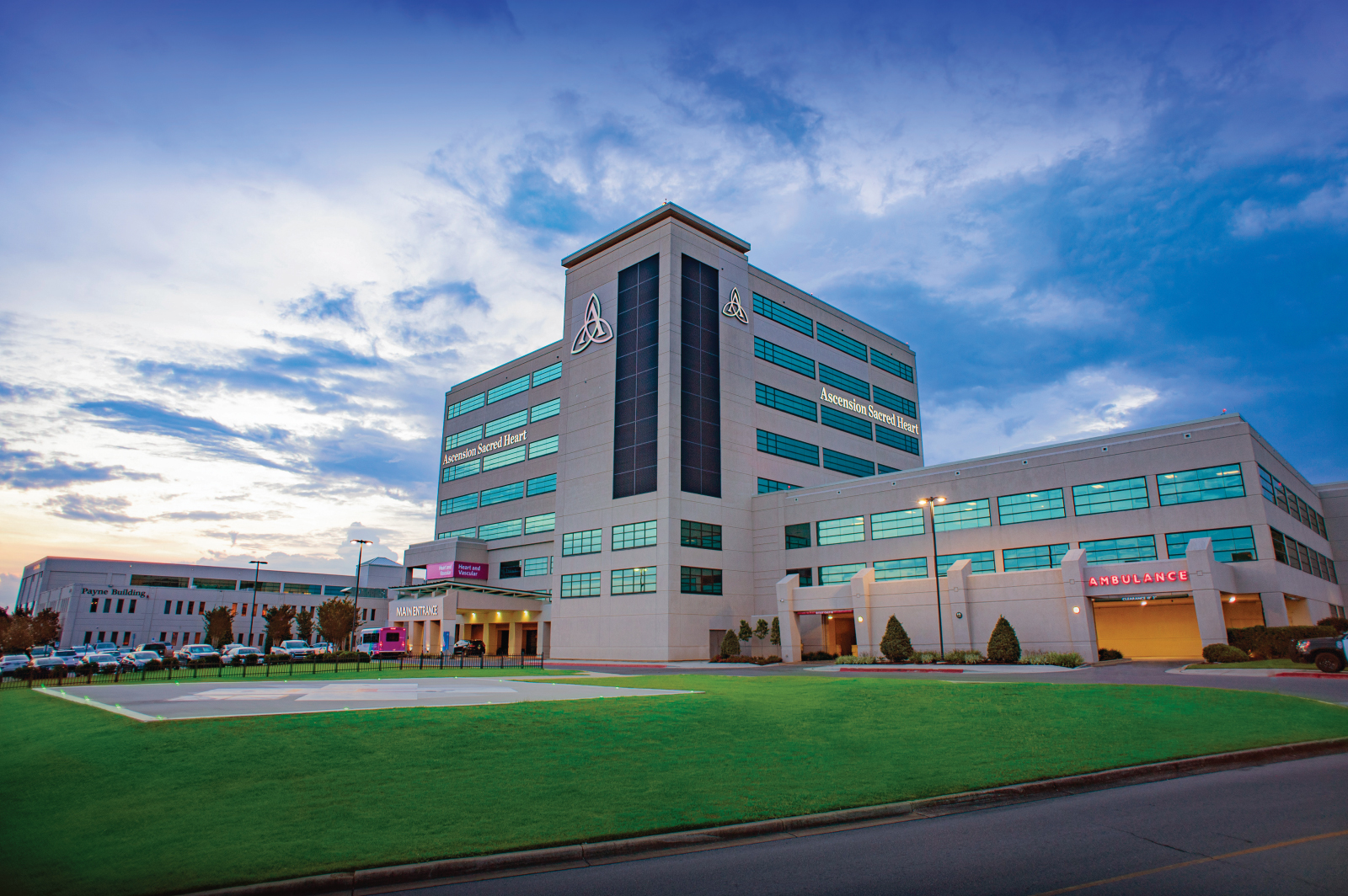
Ascension Sacred Heart PGY1 Residency Program Structure |
Required “Core” Rotations Duration is one calendar month with the exception of orientation Number of core rotations is 7 |
Core Orientation (approx. 6 weeks) Core Internal Medicine 1 Core Internal Medicine 2 Core Critical Care Core Infectious Diseases Core Ambulatory Care Core Pharmacy Administration |
Required “Core” Longitudinal Rotations (7) |
Rotation | Cadence |
Longitudinal Pharmacy Practice Management
| 36 week learning experience Each resident will participate in two 12-week block experiences focused on Pharmacy and Therapeutics (P&T) and Medication Safety/Pain Stewardship. During the 12 weeks focused on Medication Safety/Pain Stewardship or Pharmacy and Therapeutics. Throughout the 36 week learning experience, the resident participates in other leadership related activities. For two months the resident serves as the Chief Resident during the core Infectious Diseases and Pharmacy Administration learning experiences participating in the following: Coordinating resident-RPD meetings, including setting the meeting agenda and taking meeting minutes, Assisting with students as needed, Leading daily safety huddles once a week in the central pharmacy. Attend Research committee meetings and provide research related feedback from residents Attend/Participate in at least 2 P&T meetings Attend/Participate in at least 2 ASP meetings Attend/Participate in at least 2 Med Safety meetings or Pain Stewardship meetings.
All residents assist with Pharmacy Week activity planning each October. Residents volunteer for two (2) community service activities throughout the year. December each year for one week all PGY1 pharmacy residents participate in the Residency Program Showcase at the annual ASHP Midyear Clinical Meeting (MCM) for the purpose of recruiting applicants and providing onsite interaction with prospective resident candidates. Midyear responsibilities include Recruiting future residency candidates, Presenting research project posters, Attending a minimum of 8 CE sessions.
Residents present on two practice changing topics to the pharmacy staff at either a daily huddle or the monthly pharmacist meeting after midyear during the January or February pharmacist meetings.. Residents bring back at least 2 research ideas/topics from Midyear that are reviewed for future research projects for the residency program.
Residents participate in the PGY1 pharmacy residency interview process. Participate in the review and pre-interview scoring of candidates and the candidate assessment. Participate in the candidate selection for an interview meeting. Participate in the candidate interview sessions as part of the interview teams. Participate in the scoring of residency interview candidates. Participate in the initial ranking of candidates before the interview committee’s final selection.
ASH PGY1 Residents: Attend the Florida Residency Conference each May. Each resident completes a minimum of 4 hours of CE. Residents attend each co-residents presentation. Bring back two practice changing topics to communicate to the research committee meeting.
|
Longitudinal Pharmacy Admin Block Schedule ![]()
|
Block Infectious Diseases (2 presentations) | Two evidence-based topic discussion presentations that are one-hour long (~40 min for presentation, ~20 minutes for questions/discussion) incorporating a patient case. This will occur approximately every 2-4 weeks over the 52 week residency program.
|
Longitudinal Research Flip 1 | July July 1: Project selection due July 22 - 3: Present Research Proposal July 31: Complete CITI online training Meet with research team and set all expectations & initial deadlines Reach out to statistician to set up initial meeting Finalize data collection sheet with preceptors Begin data collection
August September September 13: Draft ASHP abstract due to research teams and RRC chairs for review/feedback September 25: Final ASHP draft due to RRC chairs September 26: Final date for IRB submission, must submit 2 weeks prior to IRB meeting on Oct 10 Data collection and abstract writing Meet with statistician if needed
October October 1: Last day to submit ASHP MCM Poster Abstract Meet with statistician if needed to finalize stats Finalize data collection/results
November November 20: ASHP poster final draft due to RRC, send poster to printer 1 week prior to departure Finalize stats beginning of November
December Attend ASHP Midyear Present research posters
January January 15: Work on finalizing abstract for FRC with research teams Register for FRC and reserve hotel Begin process for manuscript publication TBD - final FRC abstract, objectives, bio, assessment questions due to research team for approval to submit
February Tie up loose ends on project one Begin working on FRC presentation Be on lookout for VRC information
March March 10: FRC: (*Goal is for everyone to submit for Excellence in Research (EIR) award) - submit FULL abstract (with results & conclusions) & application for Excellence in Research FRC: If not submitting for FRC EIR award, only title, objective, and assessment question are due March 14 (Speaker Packet to be sent out in early March) VRC: submit packet (Title, Knowledge-based Professional Practice Gap, Educational Need, Needs Assessment Data Source, Objective, Assessment Question, Presenter CV, Bio, and COI Disclosure Submission) March 31 - PPA (PEDS RESIDENT ONLY) - Deadline for Resident Final Slides Week of Mar 31 - Ascension Virtual Residency Conference (VRC) schedule finalized and presenters notified of presentation date/time
April May May 16 or May 23 - Residents REQUIRED to attend one practice call or Resident Committee meeting prior to VRC May 9 - VRC final slides & abstract due - submit to VRC Resident Submission Folder (sent out via email May 15-16 - ASH residents attend Florida Residency Conference, Tampa, FL
June Jun 2-5 - Ascension Virtual Residency Conference *NEW: Send recording of project presentation to incoming class of residents. Two weeks prior to last day of residency - close out IRB if needed, all documents linked in google spreadsheet, RRC sign off on manuscripts
|
Longitudinal Research Flip 2 (6 months) | December January February March Meet with Florida State University statistician, as needed Begin writing manuscript (background, methods)
April May Submit 2 research ideas from the Florida Residency Conference One week before 2nd Tuesday of month, last opportunity to submit to eIRB
June Two weeks prior to last day of residency - close out IRB if needed, Link all documents in the Google spreadsheet, Residency Research Committee signs off on manuscripts
|
Longitudinal Staffing (12 months) Staffing is included in your salary stipend. There is no additional compensation for weekend, resident evening, or holiday coverage. | 3rd weekend rotation, 10-hour shifts, beginning the first two residency weekends. Holiday Staffing: Work ONE major Holiday (Thanksgiving or Christmas) Work TWO minor holidays (New Year’s Day, MLK Day, Good Friday, or Memorial Day). Each holiday requires TWO residents to work.
Resident evening: One 5 hour evening shift a week from 1600 to 2100.
|
Longitudinal Teaching Certificate (10 months) | Virtual Orientation, 3rd Saturday in August for 3.5 hours; Monthly Virtual CE meetings with USF staff during the 2nd Wednesday of each month from 6 to 7 PM |
Elective Rotations (4) Duration is one calendar month with the exception of the final rotation in June which is 2 weeks in duration. |
Elective Academia Elective Advanced Ambulatory Care Elective Advanced Critical Care Elective Advanced Infectious Diseases Elective Advanced Internal Medicine 1 Elective Cardiology Elective Emergency Medicine Elective Neonatal Intensive Care Elective Oncology Elective Pediatric Hematology/Oncology Elective Pediatric Intensive Care Elective Pediatric Internal Medicine Elective Perioperative Medicine Elective Sterile Compounding Elective Transplant Other elective learning experiences may be developed based on resident interest and preceptor availability |
Dedicated Research Block (1) (~ 4 weeks) |
Research month (part of longitudinal research flip 1 and flip 2 quarterly assessments) |