
Studer Family Children's Hospital PGY1 Residency
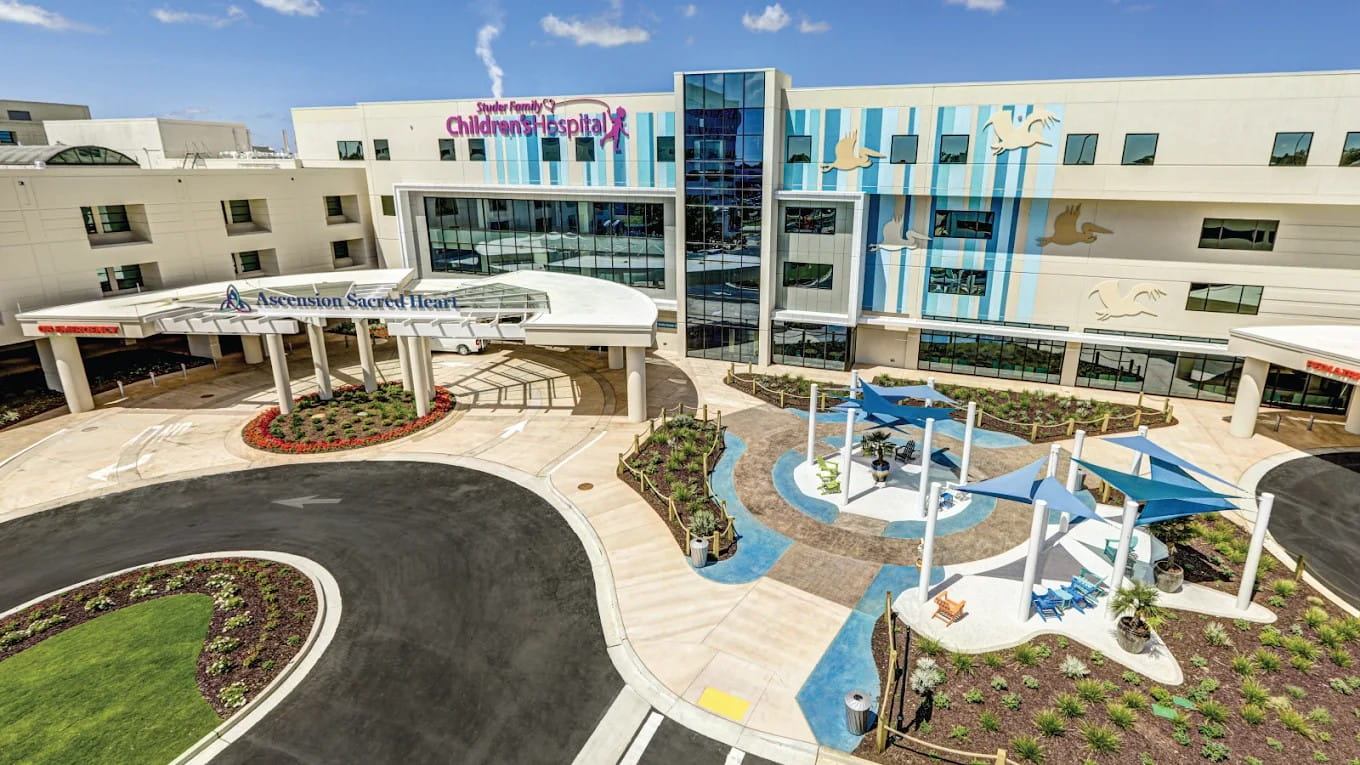
Studer Family Children's Hospital PG1 Residency Program Overview
Starting Date: 06/15/2026
Application Deadline: 1/3/2026
Duration/Type: 52 weeks
Number Positions: 2
Annual Stipend: $50,500
Benefits: Paid time off and sick days (12 days); full health, dental, and vision benefits (if the resident elects coverage); Paid attendance to ASHP Midyear meeting and the Florida Residency Conference (FRC). For each conference benefits include conference registration, meals, lodging, mileage reimbursement (if driving) or airfare (if flying).
Interview Required: Yes (Offering both Onsite and Virtual Interviews)
Residency Special Features:
- Candidates must be graduates or candidates for graduation from an ACPE accredited degree program.
- Candidates must be eligible for pharmacist licensure in the state of Florida or have an active pharmacist license in the state of Florida.
- Candidates must be committed to fulfilling all the requirements of the program.
- Candidates must pass a drug screen upon employment.
Ascension Sacred Heart NMS Code = 163113
Benefits: Paid time off (12 days); full health, dental, and vision benefits; Paid attendance to ASHP Midyear meeting and the Florida Residency Conference.
Special Requirements for Acceptance:
- Candidates must be graduates or candidates for graduation from an ACPE accredited degree program.
- Candidates must be eligible for pharmacist licensure in the state of Florida or have an active pharmacist license in the state of Florida.
- Candidates must be committed to fulfilling all the requirements of the program.
- Candidates must pass a drug screen upon employment.
Completed applications include:
- Curriculum Vitae
- Letter of intent
- College of Pharmacy transcripts
- Three letters of recommendation
Applicants can select from the following interview 2026 interview dates:
In Person Interviews
- Friday January 23, 2026
Virtual Interview
- Friday, January 30, 2026
Contact us:
Residency Program Director
Ernie Cyr
ernie.cyr@ascension.org
Residency Program Coordinator
Keyosha Smart Stallworth
keyosha.smart@ascension.org
PGY1 Program Purpose
PGY1 pharmacy residency programs build on Doctor of Pharmacy (Pharm.D.) education and outcomes to contribute to the development of clinical pharmacists responsible for medication-related care of patients with a wide range of conditions, eligible for board certification, and eligible for postgraduate year two (PGY2) pharmacy residency training.
PGY1 Residency Program Mission
About us - Ascension
About us - Studer Family Children's Hospital
Studer Family Children’s Hospital is northwest Florida’s only children’s hospital
Every day, doctors and care teams at Studer Family Children’s Hospital at Ascension Sacred Heart deliver advanced, lifesaving pediatric care for sick and injured children from across Northwest Florida, South Alabama and South Georgia.
At Studer Family Children’s Hospital, children and their families are connected to more than 120 pediatric specialists in over 30 pediatric specialties – including leading pediatric surgical care, advanced neonatal care, comprehensive blood and cancer care and more.
For more complex conditions, children benefit from the care of multispecialty care teams, delivering care for the whole child – physical and emotional health.
And when families need emergency care, we’re ready with 24/7 pediatric emergency, trauma and surgical care at Studer Family Children’s Hospital. Our neonatal and pediatric ambulances and helicopter transport team – along with community emergency medical service (EMS) providers – bring lifesaving care to communities across our region.
About our PGY1 Program
Our PGY1 residency program has been ASHP accredited since 2003. We are Pensacola’s first accredited pharmacy residency program with over 20 years of experience as a PGY1 residency program in the Northwest Florida region. In 2024, we pursued a separate pediatric PGY1 residency program at Studer Family Children’s Hospital (SFCH) within Ascension Sacred Heart Pensacola.
Our SFCH is currently in candidate status with ASHP and recruits two (2) PGY1 resident positions each year.
Our Vision
Our Values
Service of the poor: Generosity of spirit, especially for persons most in need
Reverence: Respect and compassion for the dignity and diversity of life
Integrity: Inspiring trust through personal leadership
Wisdom: Integrating excellence and stewardship
Creativity: Courageous innovation
Dedication: Affirming the hope and joy of our ministry
Our History
More than a century ago, when the people of Pensacola asked for better healthcare and a more modern hospital, their prayers were answered by the Daughters of Charity. The Daughters comprise a religious order that was founded in 1633 in France by St. Vincent de Paul and St. Louise de Marillac with the mission of caring for the poor and the sick. The Daughters came to Pensacola not only to build a hospital, but to carry out their charitable mission of providing excellent healthcare to all persons, with special attention to the poor and vulnerable.
Today, the hospital built in Pensacola by the Sisters continues that same mission. Pensacola remains the hub of what has become a truly regional Health System with three hospital campuses, as well as outpatient facilities, physician offices and other services spanning 200 miles of the Gulf Coast from Gulf Shores, Ala. to Apalachicola, Fla. After 50 years in its original stone structure on 12th Avenue, the hospital relocated in 1965 to a new hospital off Ninth Avenue in Pensacola, across from Cordova Mall.
Since then, Sacred Heart has continued to advance its technology and expand its services. In August of 1996, Sacred Heart Children's Hospital - Northwest Florida's first and only children's hospital - opened on the Pensacola campus.
In 2000, Sacred Heart completed major expansion projects that added new wings for surgical suites, a Regional Heart and Vascular Institute and a new center for emergency/trauma services. Sacred Heart teamed up with Methodist Homes to open the new Haven of Our Lady of Peace nursing home off Summit Boulevard in November 2001. Sacred Heart completed the largest expansion of its Pensacola campus in 2014 with the construction of the Bayou Tower, which added 112 private rooms to the hospital. In 2016, Sacred Heart broke ground on a new four-story Children's Hospital -- the Studer Family Children's Hospital at Sacred Heart -- which opened in 2019.
Today, Sacred Heart continues its legacy of serving individuals, families and communities as part of Ascension. Together, our caregivers strive to bring you coordinated, compassionate care that is personalized to your individual needs.
Ascension Health
Ascension is one of the nation’s leading non-profit and Catholic health systems, with a Mission of delivering compassionate, personalized care to all, with special attention to those most vulnerable. In FY2025, Ascension provided $1.7 billion in care of persons living in poverty and other community benefit programs along with $1.8 billion of unreimbursed care for Medicare patients. Across 17 states and the District of Columbia, Ascension’s network encompasses approximately 97,000 associates, 23,400 independent providers, 90 wholly owned or consolidated hospitals, and ownership interests in 29 additional hospitals through partnerships. Ascension also operates 22 senior living facilities and a variety of other care sites offering a range of healthcare services.
PGY1 Residency Program Learning Structure
The PGY1 pharmacy residency program’s structure is outlined in the table below. Learning experience sequencing takes into account the residents’ entering interests, whenever possible. This is intended to assist the residents in defining their areas of interest as well as evaluate what opportunities to seek at the Midyear Clinical meeting. To allow for flexibility, learning experiences may change throughout the course of the residency year as long as it is in the best interest of the residents and the program.
Studer Family Children's Hospital PGY1 Residency Program Structure
Required “Core” Rotations - 7 required rotations
Duration is one calendar month with the exception of orientation
- Core Orientation (approx. 6 weeks)
- Core Pediatric Internal Medicine 1
- Core Pediatric Internal Medicine 2
- Core Infectious Disease
- Core Neonatal Intensive Care
- Core Pediatric Intensive Care
- Core Pediatric Ambulatory Care/Infusion Therapy
- Core Pediatric Pharmacy Administration
Required “Core” Longitudinal Rotations (7)
-
Longitudinal Infectious Diseases (3 pediatric patient focused ID topic reviews)
-
Longitudinal Pharmacy Practice Management (24 weeks) - 12 weeks P&T focus; 12 weeks of Medication Safety/Pain Stewardship focus (pediatric pharmacy related topics)
-
Longitudinal Research (12 months)
-
Longitudinal Staffing (every other weekend and one staffing day per month)
-
Longitudinal Virtual Teaching Certificate through the University of South Florida (Virtual Orientation, 3rd Saturday in August for 3.5 hours; Monthly Virtual CE meetings with USF staff during the 2nd Wednesday of each month from 6 to 7 PM)
Elective Rotations (3) - Duration is one calendar month with the exception of the final rotation in June which is 2 weeks in duration.
-
Elective Advanced Neonatal Intensive Care
-
Elective Advanced Pediatric Intensive Care
-
Elective Pediatric Emergency Medicine
-
Elective Pediatric Hematology/Oncology
-
Elective Advanced Pediatric Hematology/Oncology
-
Elective Advanced Pharmacy Administration
-
Elective Academia
-
Elective Advanced Ambulatory Care
-
Elective Advanced Critical Care
-
Elective Advanced Infectious Diseases
-
Elective Cardiology
-
Elective Emergency Medicine
-
Elective Neonatal Intensive Care
-
Elective Oncology
-
Elective Pediatric Hematology/Oncology
-
Elective Pediatric Intensive Care
-
Elective Pediatric Internal Medicine
-
Elective Perioperative Medicine
-
Elective Sterile Compounding
-
Elective Transplant
Other elective learning experiences may be developed based on resident interest and preceptor availability
Dedicated Research Block (1) (~ 4 weeks)
- Research month (part of longitudinal research learning experience)
Program Completion Requirements
One Completed Research Project
IRB approved or determined IRB exempt
Submission ready manuscript
Conference Presentations
ASHP Poster Submission and Presentation
Florida Residency Conference Abstract Submission and Presentation
Virtual Residency Conference Presentation to Ascension National
At Least One Medication Use Evaluation (MUE)
Education Programs
2 Noon Conference Presentations to the Internal Medicine residency team
CE Presentation to the Pharmacy Staff
At least 1 Journal Club
One written education example
Patient education (brochure or handout)
Education to the healthcare provider (newsletter, medication or disease management update)
Education to pharmacists (guideline update)
One of the following completed:
Drug Class Monograph or
Monograph or
Treatment Guideline or
Treatment protocol or pathway or
Order set
Meets Total Hours Commitment
Completed Twelve Months of Residency equaling 2080 Hours
Attend Health System Meetings
Attend Two P&T Meetings
Attend Two Antimicrobial Stewardship Meetings
Attend Two Medication Safety Meetings (includes Pain Stewardship)
Volunteer Activities
Activity #1
Activity #2
Departmental Service Commitment (Staffing)
Average 40 hours every 4 weeks or 60 hours every 6 weeks
Attend and Participate in State and National Conferences
ASHP Midyear
Florida Residency Conference
Certifications
BLS
PALS
Teaching Certificate
CITI Training
Medication Safety Event Documentation in our Event Reporting System (ERS)
At Least 12 Documented Adverse Events or Near Misses Documented Per Year